CELIA'S SHADOW
Is someone in your world allergic to basic decency?
Do you leave encounters with toxic people feeling frustrated and angry after they've unloaded their venom on you?
Your silence tells others that they can mistreat you without consequence.
Learn easy, practical, and effective ways to deal with people who don't deserve a seat at you table—let alone your emotional labor.
PREVIEW - Chapter One
ABOUT ENOUGH
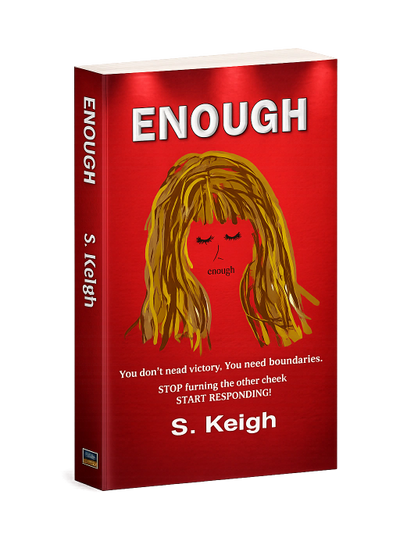
Enough isn’t a long-winded 275+ self-help manifesto stuffed with endless examples of other people’s bad behavior. It’s a practical, no-bullshit guide to dealing with assholes—without sacrificing your dignity.
This book isn’t therapy, and it isn’t inspirational fluff. It’s a functional guide for recognizing mean-spirited treatment, shutting it down, and either confronting it or walking away without guilt. No rambling anecdotes. No moral lectures. Just a small set of clear, usable tools for dealing with people who mistake kindness for weakness.
Enough also isn’t about the ordinary disagreements and misunderstandings we all experience with family, friends, and colleagues. Those situations are universal. You shouldn’t feel compelled to walk away from—or deeply analyze—a relationship unless the problem is ongoing disrespect or abuse.
It would be irresponsible to publish this book without reinforcing an equally important point: when “good” people act badly—and it’s genuinely out of character—set your ego aside and ask what’s going on. Sometimes what looks like hostility is just miscommunication, stress, or a bad moment, and a simple face-to-face conversation can fix it quickly.
Avoid emails or texts when it comes to people you care about. There’s too much room for misunderstanding in written words. The “good ones” are worth the time. Work it out when you can—and have no regrets.
As stated, this book is not about the good ones; it’s about dealing with repeat offenders—people who rely on constant digs, passive-aggressive remarks, and calculated behavior meant to keep you off balance.
This is about recognizing and responding to long-term, mean-spirited behavior and situations.
You already know what's bothering you. Wading through page after page about other people's stories won’t fix anything. It might reassure you that you're not alone—but if you're reading this, you've already identified the problem. And the specific incident doesn’t matter. What matters is that you've reached your limit.
Other people's stories can offer solidarity, but solidarity with strangers doesn’t stop verbal attacks on you. Tools do. And that's what this book provides: a handful of fundamental, practical strategies for handling the nonsense that keeps landing in your lap.
Will this book magically transform every confrontation with an awful person in your life? No. But it will help you to no longer stand there empty-handed—and that's where change actually begins.
This website uses cookies.
We use cookies to analyze website traffic and optimize your website experience. By accepting our use of cookies, your data will be aggregated with all other user data.